
Engineering Considerations for Lifting and Rigging High-Value Equipment
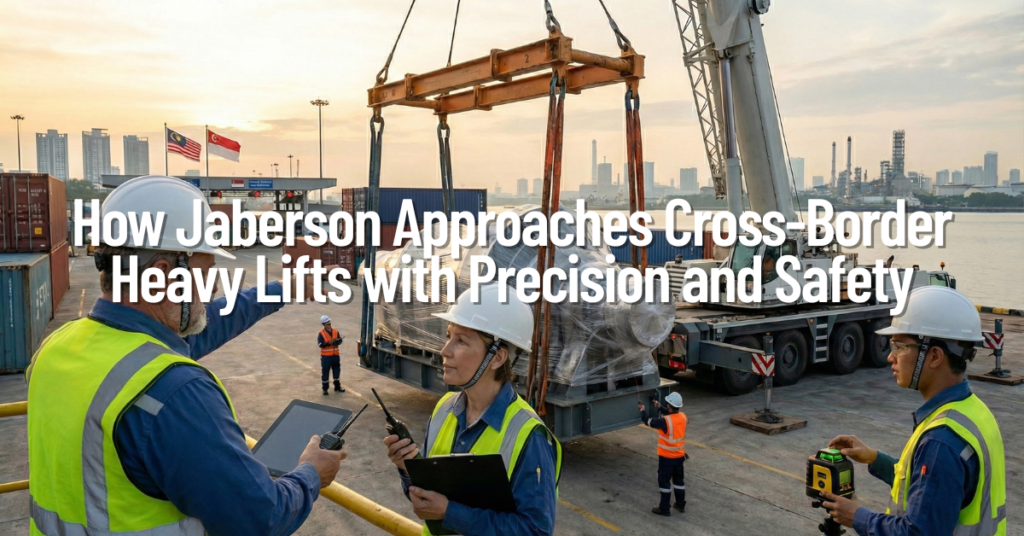
With certified teams, warehouses, and logistics coverage in both Johor and Singapore, Jaberson Technology offers unmatched control over cross-border equipment relocations. Learn how dual-nation operations reduce delays, simplify compliance, and deliver cost-efficiency for your next industrial move.
Leveraging Jaberson’s Singapore–Johor Dual Presence for Equipment Relocation
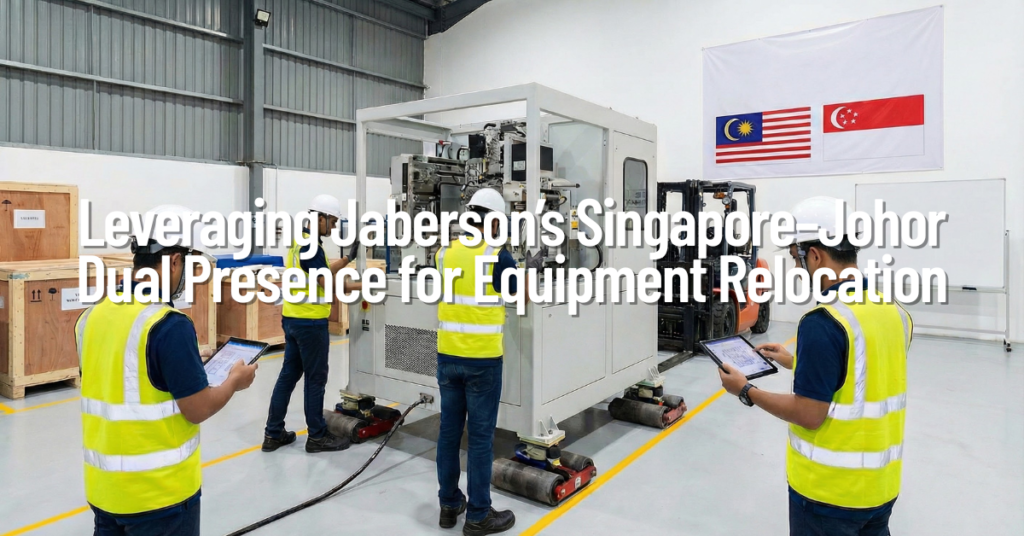
With certified teams, warehouses, and logistics coverage in both Johor and Singapore, Jaberson Technology offers unmatched control over cross-border equipment relocations. Learn how dual-nation operations reduce delays, simplify compliance, and deliver cost-efficiency for your next industrial move.
Regulatory Differences You Must Know: Industrial Relocation Between Johor and Singapore
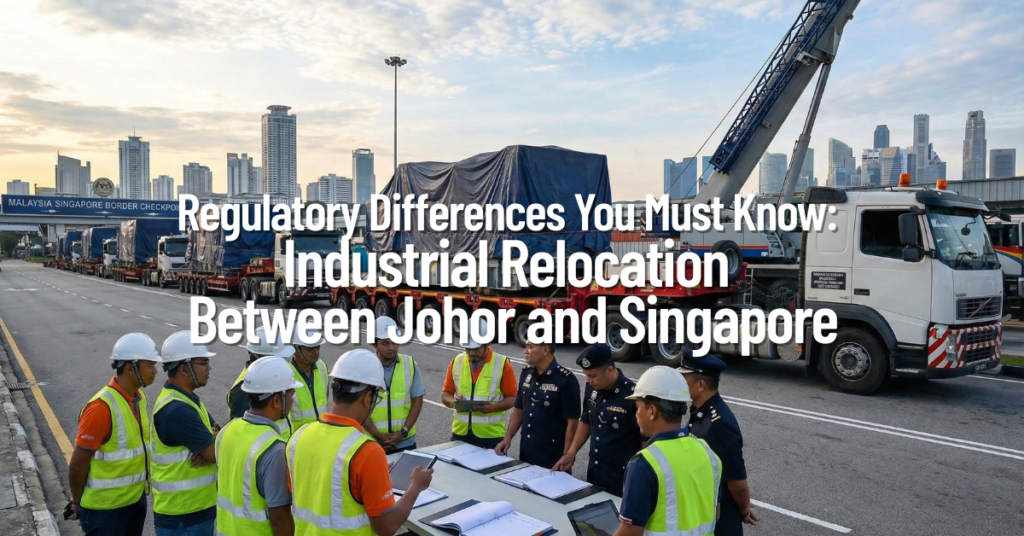
Industrial relocations across Malaysia and Singapore are subject to vastly different safety, labour, and equipment regulations. In this article, Jaberson Technology outlines the core regulatory discrepancies engineers must understand — and how bridging those differences can make or break your relocation timeline.
Bridge the Gap: Cross-Border Factory Relocation Planning Between Johor and Singapore
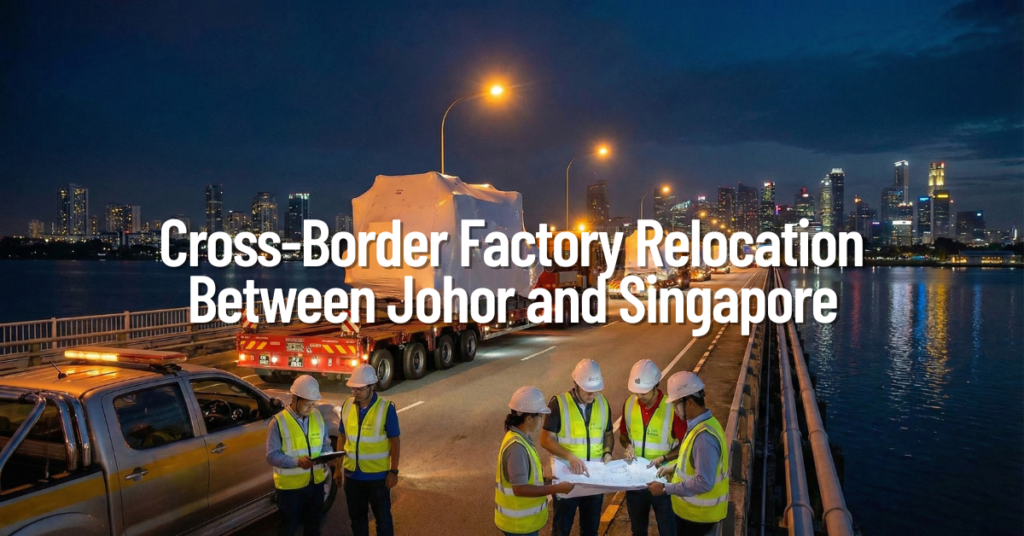
Cross-border factory relocations aren’t just about logistics — they’re strategic business moves. From phasing production to legal structuring and utility reconfiguration, this guide outlines the critical planning considerations manufacturers must address when relocating operations between Johor and Singapore. Jaberson Technology shares key lessons from the field.
Johor to Singapore: How Jaberson Manages Seamless Industrial Equipment Transport
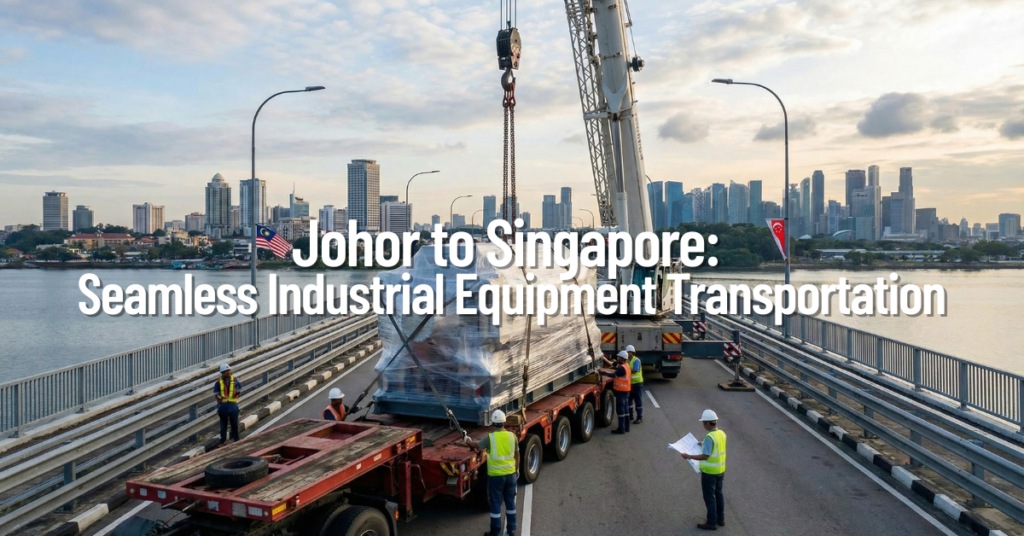
Moving heavy equipment across the Johor–Singapore corridor is a complex operation involving permits, customs, road escorts, and strict documentation. This article breaks down how Jaberson Technology simplifies cross-border industrial transport through end-to-end execution — minimising downtime while ensuring compliance on both sides of the causeway.
What to Look for When Hiring Heavy Equipment Movers: 7 Critical Questions Engineers Must Ask
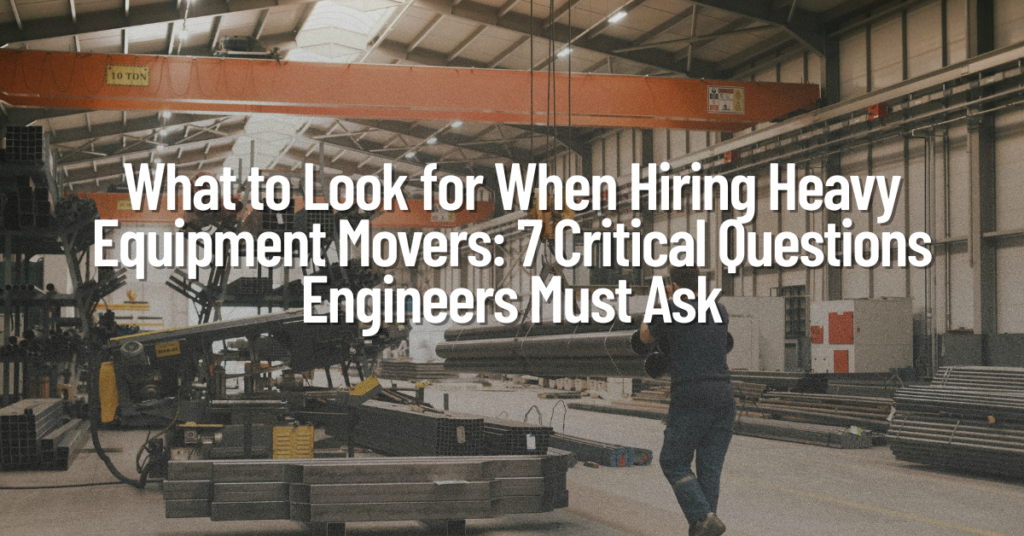
Selecting a heavy equipment mover is an engineering decision—not a logistics one. The wrong contractor can compromise machine integrity, violate safety standards, and cause costly production downtime. This article outlines the seven critical technical criteria engineers must evaluate before hiring a mover, from engineered lift plans and certified rigging equipment to competency of personnel, compliance documentation, and proven industrial experience. For operations that cannot afford risk, choosing a qualified partner like Jaberson Technology is essential.
The Cost of Cutting Corners: Why General Movers Can’t Handle Heavy Equipment
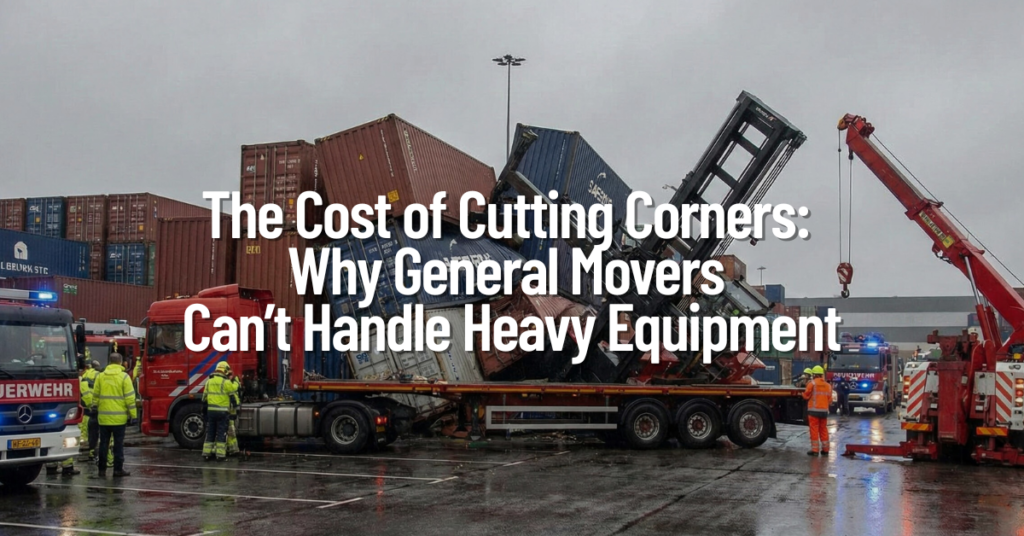
The industrial relocation game is unforgiving. One wrong lift angle, one missing torque spec, or one inexperienced mover can cost you months of downtime, shattered calibrations, or worse—non-recoverable damage.
General movers are built for boxes. Jaberson Technology is built for tons. We engineer every step—rigging plans, risk assessments, and transport logistics—because in this field, shortcuts aren’t efficient; they’re expensive. If your mover can’t speak the language of centre of gravity, shock-load absorption, or re-anchoring precision, they have no business touching your line.
When safety, uptime, and precision matter, don’t gamble. Choose a relocation partner who’s built for the load.
Heavy Equipment Movers vs. Industrial Relocation Consultants: What’s the Difference?
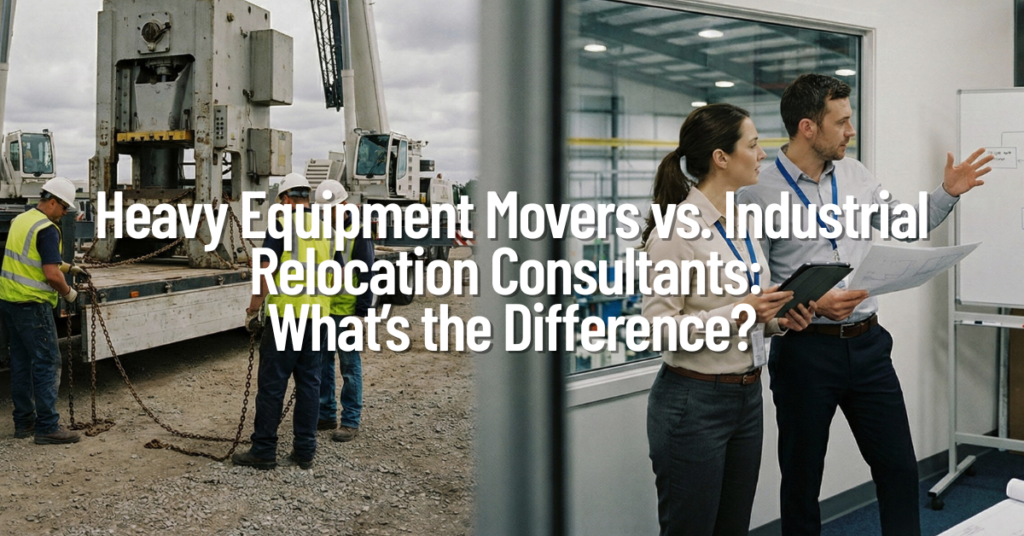
When it comes to relocating massive, mission-critical machines, the margin for error is zero. General movers may suffice for residential or office relocations, but the stakes are far higher in industrial settings where precision, load calculations, compliance, and technical dismantling are non-negotiable. This article breaks down the key differences between general movers and specialized heavy equipment movers—uncovering why engineering managers must demand more than just manpower. At Jaberson Technology, we approach every relocation project as an engineered operation, not a simple transport job.
Common Mistakes in Heavy Machinery Moving
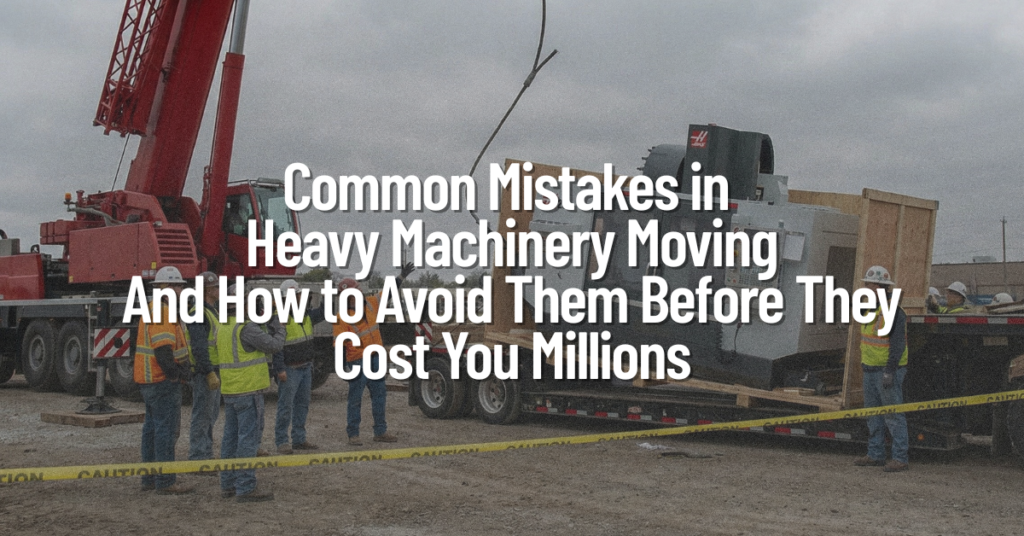
Cutting corners in heavy machinery relocation is not just a cost issue—it’s a liability. One missed assessment, one wrong rigging point, or one miscalculated floor load can lead to thousands in damage, operational downtime, or even serious injury. Yet these mistakes are still rampant, especially when businesses assign general movers without industrial know-how to handle precision equipment.
In this article, we break down the seven most common—but often overlooked—errors engineers encounter during equipment relocation projects. More importantly, we show you what seasoned professionals do differently—from pre-move engineering assessments and custom rigging systems to precision calibration and post-installation signoffs. If you’re moving a 10-ton press or a delicate CNC line, these aren’t just best practices—they’re non-negotiable standards.
Read on to learn how to harden your relocation strategy and avoid the kind of oversights that cripple projects.
Documentation You Need for Insurance in High-Risk Machinery Moves
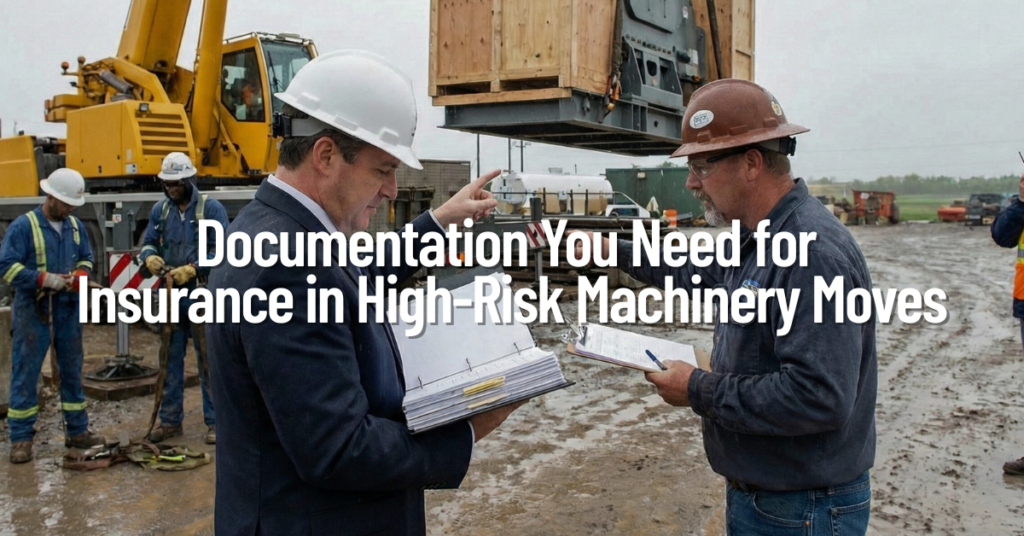
When you’re moving multi-ton machinery, insurance isn’t a formality — it’s risk control. In high-stakes relocations, the difference between a claim being honored or denied often comes down to one thing: documentation. Most engineers focus on logistics, but underestimating paperwork can lead to costly oversights. From asset registers to method statements and liability clauses, every document serves as a layer of operational and financial protection. Whether you’re relocating a single CNC machine or an entire plant, being under-documented is a liability you can’t afford.